
The latest hiring data brings a clear message: the UK labour market is showing resilience and growth in early 2026. As reported by the Recruitment & Employment Confederation Labour Market Tracker, active job postings in the UK rose to 1,530,172 in February 2026—showing a 5% increase from January 2026. This rise signals that employers regained confidence and reopened hiring after the year-end pause.
Yet, while the pool of open positions expanded, new job postings in February 2026 were 744,566—a decrease of 1.4% from January but still about 12% higher than February 2025. The strong year-on-year increase highlights persistent employer demand and ongoing market adjustment, despite a short-term dip in monthly new postings.
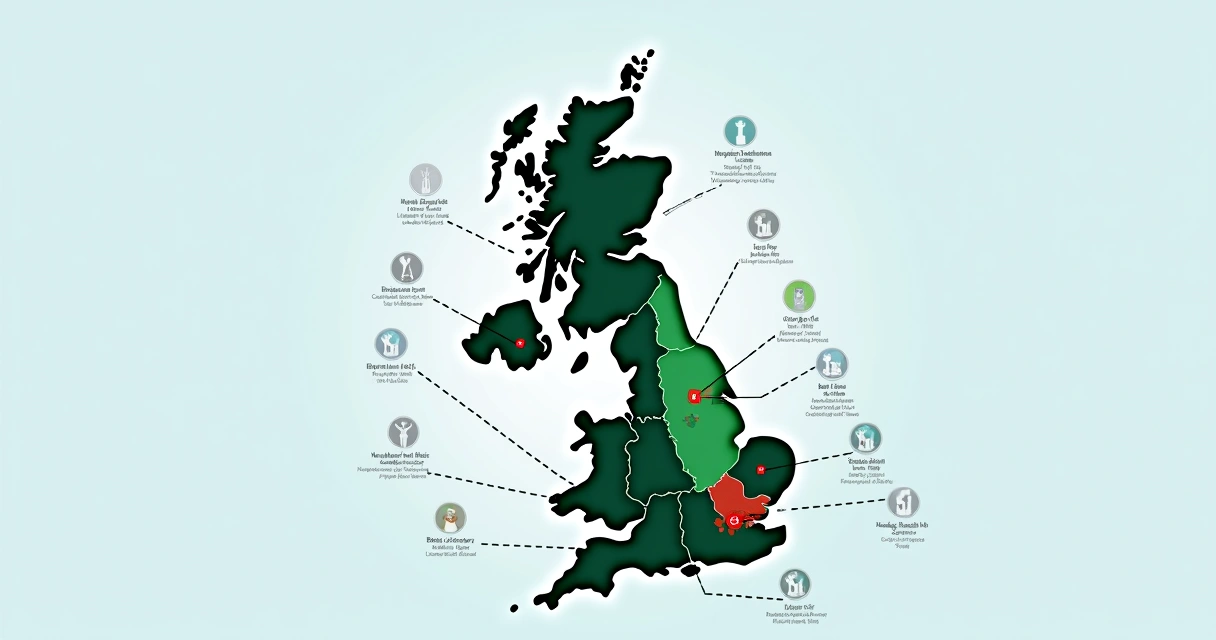
Let’s examine the hot spots: Na h‑Eileanan Siar led the country with a remarkable 54.8% jump in active postings, followed by Isle of Wight (18.6%), West Essex (16.2%), Buckinghamshire CC (15%), and Antrim and Newtownabbey (14.9%). Meanwhile, the biggest drops came from Gwynedd (−22%), Fermanagh and Omagh (−20.6%), Dumfries and Galloway (−20.5%), Causeway Coast and Glens (−19.1%), and South West Wales (−15.3%). Only one of the ten counties with weakest hiring was in England, showing a noticeable geographic divide with the majority of declines affecting Wales, Northern Ireland, and Scotland.
February 2026’s growth in active job postings demonstrates that the UK labour market kept positive momentum after the traditional year-end slowdown. We recognize this as a key indication of employer optimism, with hiring picking up pace following increased economic stability prior to the recent Arabian Gulf conflict.
In our experience at EWS Limited, we have seen that a stable economic environment directly shapes hiring sentiment. The relative calm in the UK motivated many firms to resume recruitment plans felt too risky at the close of 2025. This sentiment aligns with perspectives shared in the most recent ONS labour market release, which shows improvement in the 16–64 employment rate (up to 75.6%) and a slight drop in unemployment (down to 4.1%).
Labour market confidence can build remarkably quickly after a storm.
This upbeat mood was further fueled by the Chancellor’s decision and the UK government’s avoidance of major changes in the Spring Statement. Many hiring managers we speak to agreed: stability in policy and economy is a green light to hire.
Across the regions, our review of the REC Labour Market Tracker highlights sharp contrasts. The top five locations with surging active job postings in February 2026 included:
Such dramatic growth in these regions marks a change from the previous month, especially for Na h‑Eileanan Siar, which has rapidly climbed from the bottom three to claim the top growth spot in just one month.
Conversely, the largest falls in job postings were seen in:
Among the ten weakest counties, only one, West Kent, is in England, while the remaining are spread across Wales, Northern Ireland, and Scotland. This pattern tells us regional factors are highly influential—even in a growing national market, localized conditions can still sharply diverge.
 What drove the recent surge in hiring?
We see the late-winter surge in hiring as the result of a few clear factors. First is the return of employer confidence after a period of economic steadiness in the UK. Second, there is pent-up demand in specific roles and sectors, especially those linked to the government’s industrial strategy. Third, the end of the year saw many firms pause hiring, which often sets the stage for a busy start to the next year.
Notably, blue-collar and hospitality jobs, along with manual roles in manufacturing and engineering, were the main engines of growth. The prevalence of these occupations among new listings underlines a trend toward filling practical, operational vacancies faster than professional or director-level roles.
This is consistent with feedback we have gathered working with scaling tech and established IT companies, and those with international expansion plans who turn to us at EWS for support navigating country-specific hiring requirements in Europe post-Brexit.
As Neil Carberry, Chief Executive of REC, explained, “We are seeing hiring pick up as employers make the most of economic clarity, but the recent Gulf conflict and supply chain concerns remind us that the outlook can quickly change. It is time for real partnership between business and government as we face these uncertainties.”
He further warned that rising employment costs are pushing up unemployment at the margin, and called for policymakers to avoid new or complicated rules that risk making hiring harder—especially for young people, agency staff, and flexible workers. In particular, he asserted that agency workers need to be considered separately in any new proposals, as complicated regulation could slow hiring and make labour market access tougher for the most vulnerable.
We agree with the emphasis on practical, flexible solutions—especially given our core work at EWS with cross-border employment, payroll outsourcing, and employer-of-record solutions, all of which depend on clear, uncomplicated regulatory environments to serve both clients and workers.
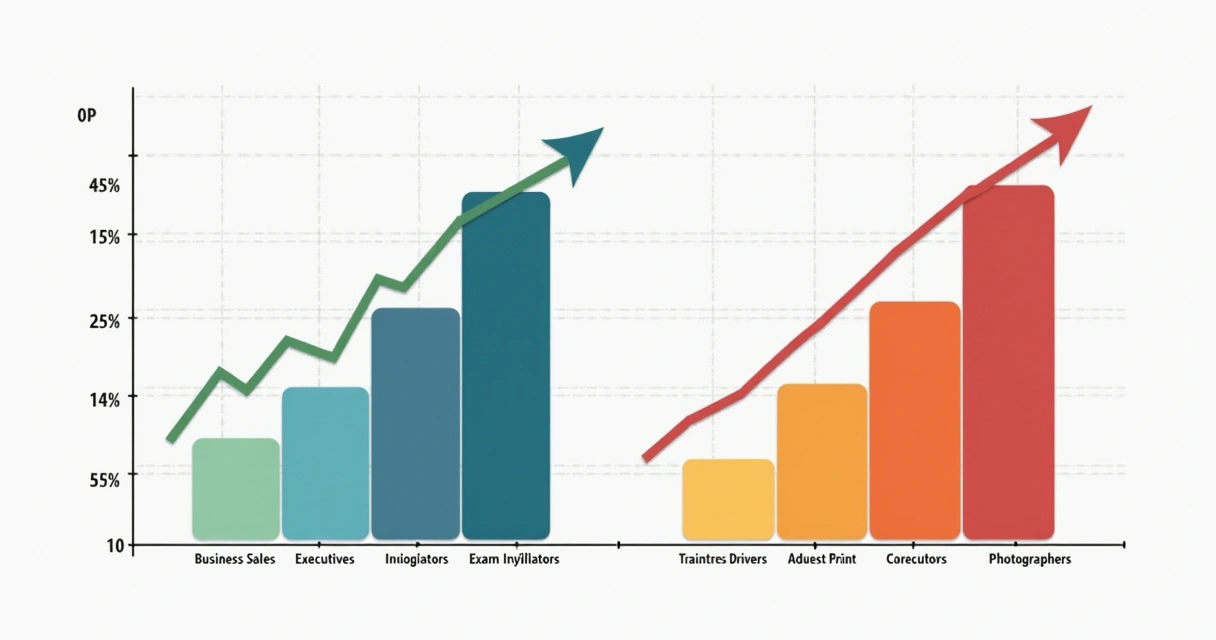
The most recent monthly shifts in demand by occupation tell a story of changing priorities as the UK economy adapts. Three roles saw the sharpest surge in demand from January to February 2026:
Meanwhile, the biggest decreases were noted among:
These trends indicate that while operational and exam-related roles are climbing quickly, creative and director-level occupations are showing contraction—at least in the latest hiring cycles.
 Sector-by-sector insights: manufacturing, engineering, creative industries
The government’s industrial strategy continues to shape hiring, with three sectors showing differently paced growth in February 2026.
Manufacturing had 62,824 active job postings in February 2026—a 6.5% increase over January. For many employers, this sector marks the pulse of the UK’s blue-collar recovery. The most in-demand manufacturing occupations were:
By contrast, demand softened for:
The ONS figures suggest that while some skilled and technical roles saw minor dips, front-line production roles remain a clear growth area. After demand fell at the end of 2025, manufacturing job postings have largely been rising since.
 Engineering job market: steady vacancy rise
Engineering posted 127,163 vacancies in February 2026, marking a solid 5.1% month-on-month increase and continuing a two-month growth streak. The strongest hiring needs were for:
Meanwhile, a handful of highly specialized technical roles experienced minor declines, but the sector continues to support the UK’s infrastructure, energy, and construction activity.
At EWS, we work closely with businesses in the engineering sector to navigate hiring, manage payroll for international contracts, and support global mobility—those efforts become even more relevant in fast-growing fields like pipe fitting and civil engineering.
The creative sector recorded 10,492 active jobs in February 2026—a slight drop of 1.7% from the previous month. However, it is a complex picture:
These groups reported increases, while others like Actors, Marketing/Sales/Advertising Directors, and Photographers saw double-digit falls. Demand volatility remains high, as shifts in media and event-related projects drive hiring closely tied to market sentiment or funding cycles.
For companies navigating creative or digital hiring, understanding local and global posting trends has become central to smart decision-making. We have resources guiding such efforts, such as our insights on cross-border recruitment and EOR advantages for international businesses.
Ongoing challenges continue to test the UK labour landscape. REC’s Neil Carberry voiced sector-wide concerns that rising employment costs are having a knock-on effect on unemployment levels. At the same time, he cautioned policymakers against imposing new layers of complexity—arguing that such moves may slow down hiring for young and marginal workers.
Carberry underscored the need for “pragmatism around employment legislation,” and we echo that call. Flexible and agency work, core to many of our clients’ business models, requires thoughtful regulation to balance opportunity and protection.
Rules that are too complicated can slow down young people’s hiring.
We encourage government and business collaboration. Maintaining simple and transparent employment processes is what allows growth, supports new entrants, and helps established companies access broader talent pools globally.
Our focus at EWS remains on simplifying hiring and supporting expansion, especially as new regulatory landscapes emerge at home and abroad.
Returning to the regional story, February 2026 marked a dramatic turnaround for Na h‑Eileanan Siar, which climbed from being among the bottom three last month to now leading in job posting growth. The other hot spots—Ireland’s Antrim and Newtownabbey, the Isle of Wight, West Essex, and Buckinghamshire—reflect a renewal of hiring energy in diverse parts of the UK.
The continued weakness concentrated in parts of Wales, Scotland, and Northern Ireland reminds us that recovery and expansion are never uniform. Local labour supply, industry mix, and political decisions all shape hiring flows at the county level.
Through our work with partners across regions, we have learned that understanding this variation is critical. A national improvement can mean little if your local area is heading the other direction. That’s why at EWS, we tailor our international and regional workforce solutions to match both the immediate and the long-term needs of each client and location.
The standout point from the current statistics is the solid year-on-year growth: new job postings in February 2026 are up about 12% compared to February 2025. Despite month-to-month fluctuations, this clear upward trajectory signals broad-based recovery and confidence.
While sector and regional specifics change month by month, companies that keep an eye on these annual trends will better position themselves to compete in key talent markets. Our specialist guides, such as tailored approaches to meeting country-specific hiring requirements, can help companies adjust for the future.
Comparing the 2026 statistics to the previous year paints a story of improved employment outcomes, with the ONS reporting the employment rate at 75.6% and average weekly earnings up by 3.2% year on year.
We believe the early 2026 UK labour market tells a story of renewed hope with lingering uncertainty.
Companies ready to grow have a range of choices. With up-to-date intelligence and a considered approach to hiring strategy, it’s possible to match opportunity with action—and avoid pitfalls that can slow a return to growth.
To gain further perspective on 2026 trends in UK and global mobility, we’ve compiled broader predictions in our report on global talent mobility.
As February 2026 data confirms, the UK labour market is in a phase of recovery and rebalancing, with regional and sector diversity shaping both the risks and the rewards. Businesses that remain alert to changing job posting rates, occupational demands, and policy shifts will stay ahead in hiring and workforce planning.
At EWS Limited, we are committed to simplifying the process, guiding organisations through the complexities of local hiring rules, global expansion, and payroll challenges. Our solutions are tailored to the needs of Series B and C startups, IT companies, and global employers looking to turn opportunity into growth.
If you want to learn more about connecting the dots for your own expansion—whether locally or across borders—discover how EWS can be your partner for successful, compliant, and confident hiring in 2026 and beyond.
The main hiring trend of 2026 is the continued increase in active job postings, reaching 1,530,172 in February—up 5% from January and 12% year on year. Blue-collar and hospitality jobs, as well as roles in manufacturing and engineering, saw high demand. Regional variation is pronounced, with some hot spots like Na h‑Eileanan Siar and Isle of Wight seeing strong posting growth, while areas in Wales, Scotland, and Northern Ireland faced declines. Policy stability and sensible regulation remain priorities for sustaining this positive trend, according to analyses from the ONS and industry leaders.
Manufacturing, engineering, and operational blue-collar roles are leading sectoral job growth in early 2026. Manufacturing recorded 62,824 active posts in February, growing 6.5% in a month. Engineering followed with 127,163 vacancies—a 5.1% rise—driven by needs in pipe fitting, project management, and technical operations. While the creative industries showed variability, some roles (such as archivists) did increase, even though the sector posted a 1.7% overall drop month on month.
Many UK businesses use AI for process automation, better hiring matches, and streamlined payroll. AI is especially useful for repetitive tasks or data-driven decision making, freeing human employees for more complex work. At EWS, we have found that while AI can reshape certain job categories, the biggest impact in 2026 remains on how jobs are sourced, matched, and scheduled—rather than on completely replacing existing roles.
The Office for National Statistics (ONS) is the official source for UK labour market data, publishing monthly statistics on employment, job postings, wages, and sector trends. Additional trends and global mobility insights can also be accessed through industry reports, such as those published by EWS Limited (for example, our analysis on cross-border recruitment in 2026).
In 2026, the most in-demand skills include technical know-how for manufacturing and engineering roles, digital and data skills, and practical abilities for blue-collar positions. Business sales executives, exam invigilators, and train and tram drivers are among the fastest-growing roles, pointing to a high value placed on operational efficiency and process reliability. Employers are also increasingly seeking candidates who can adapt to new tools (such as AI systems), as well as those comfortable with remote or cross-border collaboration.

AI in HR: How Machine Learning Is Reshaping Recruting
Spain’s Workforce Crisis: Why Migration Is Now Essential
How to Complete IRS W-8 BEN for Foreign Contractors: A Simple Guide
Exempt vs. Non-Exempt Employees: 2026 Guide for Employers
Work From Home Stipends: What They Cover and How They Work
Small Business Benefits: 8 Strategies for Rising Costs in 2026
Payroll Tax Forms in 2026: A Simple Guide for Growing Businesses
How to Build Strong Company Values That Shape Workplace Culture
EU Pay Transparency Directive 2026: A Step-by-Step Compliance Guide
AI Data Center Hotspots: Skilled Trade Wages, Growth, and Trends
Ad Hoc IT vs MSPs vs Platforms: Choosing the Right IT Approach
Misclassifying Contractors vs Employees: Risks, Penalties, Solutions
Hiring in Morocco: North Africa’s Emerging Tech Talent Market
Hiring in Portugal: What You Need to Know in 2026
Global Mobility and EOR: How to Align HR and Immigration in 2026
Beyond China: Where Asian Companies Are Hiring in 2026
How Recruiters Use EOR to Win Big in Fintech Placements
Europe’s Freelancer Laws in 2026: When to Switch to EOR
Hiring in the Philippines: 2026 Guide for Global Employers
How Recruiters Use EOR to Unlock German Healthcare Placements
Hiring in Colombia: 2026 Compliance Guide for LatAm Expansion
Hiring in Türkiye (Turkey): 2026 Guide for International Teams
How Recruiters Use EOR to Handle Rapid Global Onboarding
Top 5 EOR Red Flags to Avoid in 2026
EOR vs Entity Setup in 2026: What Startups Need to Know
10 Things You Didn’t Know Your EOR Could Do
When to Use a Payroll Provider vs Full EOR in Global Hiring
January Compliance Watch: What’s Changing in APAC Labor Laws
Hiring in Turkey in 2026: Costs, Contracts, and EOR Options
Contractor or Employee? Compliance Risks to Watch in 2026
What’s Changing in European Payroll Compliance in 2026?
How to Use EOR to Win More Government or Public Sector RFPs
Hiring in Colombia: Fast-Growing Talent Pool, Low Total Cost
Remote Tech Jobs Surge 33% in Ireland: Skills You Need Now
Remote Work in APAC: 7 Data-Driven Trends for 2026 Expansion
Remote Payroll Headaches: 7 Mistakes HR Teams Make
Freelancer vs EOR in 2026: Cost, Risk, and Speed Compared
How Employee Experience Drives Retention and Business Growth
How HR Can Reduce Burnout Amid AI, Budget Cuts, and Change
Employment Contracts: What HR and Global Managers Must Know
PEO Explained: How It Simplifies Global Workforce Management
Global Mobility: A Complete Guide for HR and Global Managers
Remote Workforce: A Complete Guide to Managing Global Teams
Workforce Planning: A Step-by-Step Guide to Strategic Hiring
How Recruiters Use EOR to Increase Revenue Per Client
The Secret to Winning Global RFPs? A Strong EOR Partner
Top 7 Hiring Trends Shaping Global Teams in 2026
Hiring in Türkiye: Key Labor Laws and Employer Risks in 2026
GCC Hiring Compliance Update: What’s Changing in 2026
How to Hire in Turkey in 2026: A Strategic EOR Guide
Why modern recruitment agencies outsource compliance to EOR partners
How adding an EOR partner helps agencies win more RFPs
EOR Opportunities in Poland: Why It’s Europe’s Talent Powerhouse
Cross-Border Hiring Trends for 2026: Insights for Global Recruiters
How to Build a Scalable Payroll Strategy Across MENA
Contractor vs Employee in Germany: What’s the Risk in 2026?
“Place globally, bill locally” — the new recruiter cheat code
Top 5 Compliance Mistakes When Expanding to the UAE
Why EOR is Key to Winning Public Sector Tenders in Europe
Growth formula for agencies using EOR to expand key accounts
How EOR helps recruiters stay ahead of fast-changing GCC compliance
Employer of Record in Mandarin: What is 境外雇主服务?
How to Use an EOR for Temporary Projects (中国公司如何为短期海外项目使用EOR服务)
Why “Go Global” Must Include Compliance (“走出去”战略中的合规盲点)
中资企业如何选择欧洲EOR供应商?(How to Choose the Right EOR Partner in Europe)
与当地政府打交道:中国公司需要了解的合规礼仪 (Cultural Compliance for Chinese Firms)
中国公司海外人力结构案例分析:制造业、科技与能源 (HR Case Studies: Chinese Firms Abroad)
How Guanxi Influences Hiring in the Middle East (关系在中东招聘中的作用)
Top 5 Risks When Hiring in the Gulf (中国企业在海湾地区招聘的五大风险)
Managing Compliance in Multi-country Projects (中国企业多国项目的人力合规管理)
The $100K Visa Shock: Why Global Hiring Just Replaced the H-1B
How to Set Up Payroll For Hpc And Ai Teams
Contracting Machine Learning Talent Abroad
Everything on Hiring Foreign Phds In German Tech Labs
Cross-Border Ip Protection In R&D Teams
How To Classify Freelancers In Tech Innovation
How Eor Helps Tech Firms Legally Hire In Germany
Dual Contract Structure For International Researchers
Data Protection Obligations For Remote Tech Staff
Germany Research Visa Vs Skilled Worker Visa
Everything on Nis2 Directive Compliance For Eu Tech Workers
Global Mobility For Deep Tech Startups In Germany
Payroll For EU Embedded Systems Developers
Relocation Support For Semiconductor Experts on EU
The Absolute Way to Hire Ai Engineers In Germany
How to Manage Benefits For German Tech Hires
Germany’S Blue Card Process For Engineers
Everything on Germany R&D Employment Compliance
Remote Hiring Of Cybersecurity Analysts In Eu
Visa Pathways For Quantum Computing Researchers
Onboarding Robotics Specialists Across EU Borders
Workforce Planning In Ai-Driven Logistics And Infrastructure
Visa Processing For High-Tech Infrastructure Staff
Managing Global Mobility In Sustainable City Projects
Cross-Border Team Management In Saudi Data Centers
Hiring Skilled Labor For Green Hydrogen Facilities
Digital Twin Technology Hiring Trends In Saudi Construction
Employer Obligations In Public-Private Energy Initiatives
Navigating Local Labor Laws For Solar Energy Teams
Talent Acquisition In The Saudi Mining Sector
Eor Solutions For Ai Engineers In Mega Projects
Regulatory Challenges In Hiring For Giga Construction Projects
Contractor Compliance In Smart City Developments
Classification Of Engineering Consultants In Vision 2030 Projects
How To Manage Workforce For Neom-Based Tech Projects
Eor For Multinational Mining Firms Operating In Saudi Arabia
Employer Of Record For Wind Energy Projects In The Gulf
Relocation Logistics For International Clean Energy Experts
Hiring Strategies For Large-Scale Construction Projects In Ksa
How To Onboard Digital Infrastructure Experts In Saudi Arabia
Payroll Setup For Renewable Energy Workers In Ksa
Strategic Relocation To Riyadh Or Doha: A Guide for Global Employers
Work Visa Processing In Qatar And Saudi Arabia
Qatar Nationalization Policy And Foreign Firms
Cost Of Setting Up A Business In Qatar: A Guide for Global Employers
Saudi Labor Court And Dispute Handling for Global Employers
Cross-Border Payroll For Ksa And Qatar Teams
End Of Service Benefits Saudi Arabia: A Guide for Global Employers
How To Manage Expat Benefits In Qatar for Global Employers
Expanding Into New Markets: Vendor Risks You Should Flag
A Guide to Cross-Border Equity Vesting for Tech Startups
Employer Branding for Multinational Teams: What Works Now
What Global C-Level Leaders Miss About Digital Nomad Visas
Succession Planning for Distributed Teams: A Practical Guide
Relocation Budgeting For Global Tech Firms
Latam Hiring Strategy: What Global Companies Should Know
Risk Of Permanent Establishment Explained
Managing Intellectual Property In Remote Work
Benefits Benchmarking Globally for Global Companies
How to Benchmark Compensation Across 100+ Countries in 2025
Checklist: Preparing HRIS for Fast International Scalability
Biometric Data in Global Payroll: Legal Boundaries Explained
8 Regulatory Updates Impacting Global HR in 2025
What are Hidden Costs of In-House Payroll?
Why Companies are Thinking Differently About Relocation
Is Your Global Mobility Program Outgrowing Spreadsheets?
Remote Work Visas: A Growing Trend in Global Mobility
Hiring in Europe Post-Brexit: What You Need to Know
Tips for Managing Multi-Time Zone Teams Successfully
Relocation Packages: What Top Talent Expects in 2025
Banking and Payroll Challenges in Saudi Arabia Markets
The Legal Risks of Misclassifying Global Workers
Why Scalability Should Drive Your Global HR Strategy
How EWS Streamlines Global Mobility for Tech Talent
Lithuania – Employer of Record
Kosovo – Employer of Record
Finland – Employer of Record
Namibia – Employer of Record
Nepal – Employer of Record
Spain – Employer of Record
Latvia – Employer of Record
Ireland – Employer of Record
Cyprus – Employer of Record
Czech Republic – Employer of Record
Italy – Employer of Record
Indonesia – Employer of Record
South Africa – Employer of Record
Tunisia – Employer of Record
Bosnia – Employer of Record
Moldova – Employer of Record
Five Tips For Improving Employee Engagement
Netherlands – Employer of Record
Germany – Employer of Record
France – Employer of Record
Portugal – Employer of Record
Bulgaria – Employer of Record
Austria – Employer of Record
Hungary – Employer of Record
Slovenia – Employer of Record
INCLUSIVITY IN THE TEAM MAKES EVERYONE WIN
Thailand – Employer of Record
Sri Lanka – Employer of Record
The Significance of an Employer of Record
Greece – Employer of Record
Mexico – Employer of Record
4 Reasons to Outsource Your Payroll
Five Recruitment Trends 2023
Malaysia – Employer of Record
Skill-Based Hiring and Benefits
Malta – Employer of Record
How To Practice Inclusive Recruitment
Israel – Employer of Record
Macedonia – Employer of Record
Jordan – Employer of Record
Macau – Employer of Record
Peru – Employer of Record
The Importance of Employer Branding
Bahrain – Employer of Record
South Korea – Employer of Record
Recruiting during a recession
Philippines – Employer of Record
USA – Employer of Record
Japan – Employer of Record
How To Setup A Business in 2023
Norway – Employer of Record
Managing Overseas Projects In 2023
Reason Of Expanding Your Workforce Globally
Croatia – Employer of Record
Colombia – Employer of Record
5 Ways To Speed Up Your Hiring Process
Egypt – Employer of Record
3 Ways To Streamline An Interview Process
Russia – Employer of Record
Saudi Arabia – Employer of Record
Hong Kong – Employer of Record
An Effective Hybrid Work Model
Turkey – Employer of Record
UAE – Employer of Record
Pakistan – Employer of Record
7 Things to Consider Before Accepting a Job
Kazakhstan – Employer of Record
3 Reasons to Encourage Employees to Generate Employer Brand Content
Denmark – Employer of Record
Sweden – Employer of Record
Bangladesh – Employer of Record
Kuwait – Employer of Record
How To Hire In The Age Of Hybrid Working
Australia – Employer of Record
Oman – Employer of Record
Qatar – Employer of Record
Ukraine – Employer of Record
Diversity – A Vital Hiring Strategy
Owning Every Moment of Your Hiring Experience
Serbia – Employer of Record
Maldives – Employer of Record
India – Employer of Record
Argentina – Employer of Record
Uzbekistan – Employer of Record
Belarus – Employer of Record
Brazil – Employer of Record
Chile – Employer of Record
Armenia – Employer of Record
3 Steps To Company Formation In The UK & Abroad
Romania – Employer of Record
Canada – Employer of Record
Morocco – Employer of Record